Human Ear Biology MCQs Part 1 | Best Practice Questions
by
Hello Aspirants! The General Science section is highly crucial for candidates preparing for government jobs. In addition to this, we provide comprehensive, topic-wise General Science MCQs & Notes on our website.
In this post, [ Human Ear Biology MCQs Part 1 ], we will practice important questions frequently asked in competitive exams from the topic ❛Sense Organs: Structure and Parts of the Ear❜. These are extremely useful for everyone preparing for UPSC, APPSC, TSPSC, RRB, SSC, POLICE, and all other competitive exams. Let’s dive into the practice without any delay!
Table of Contents
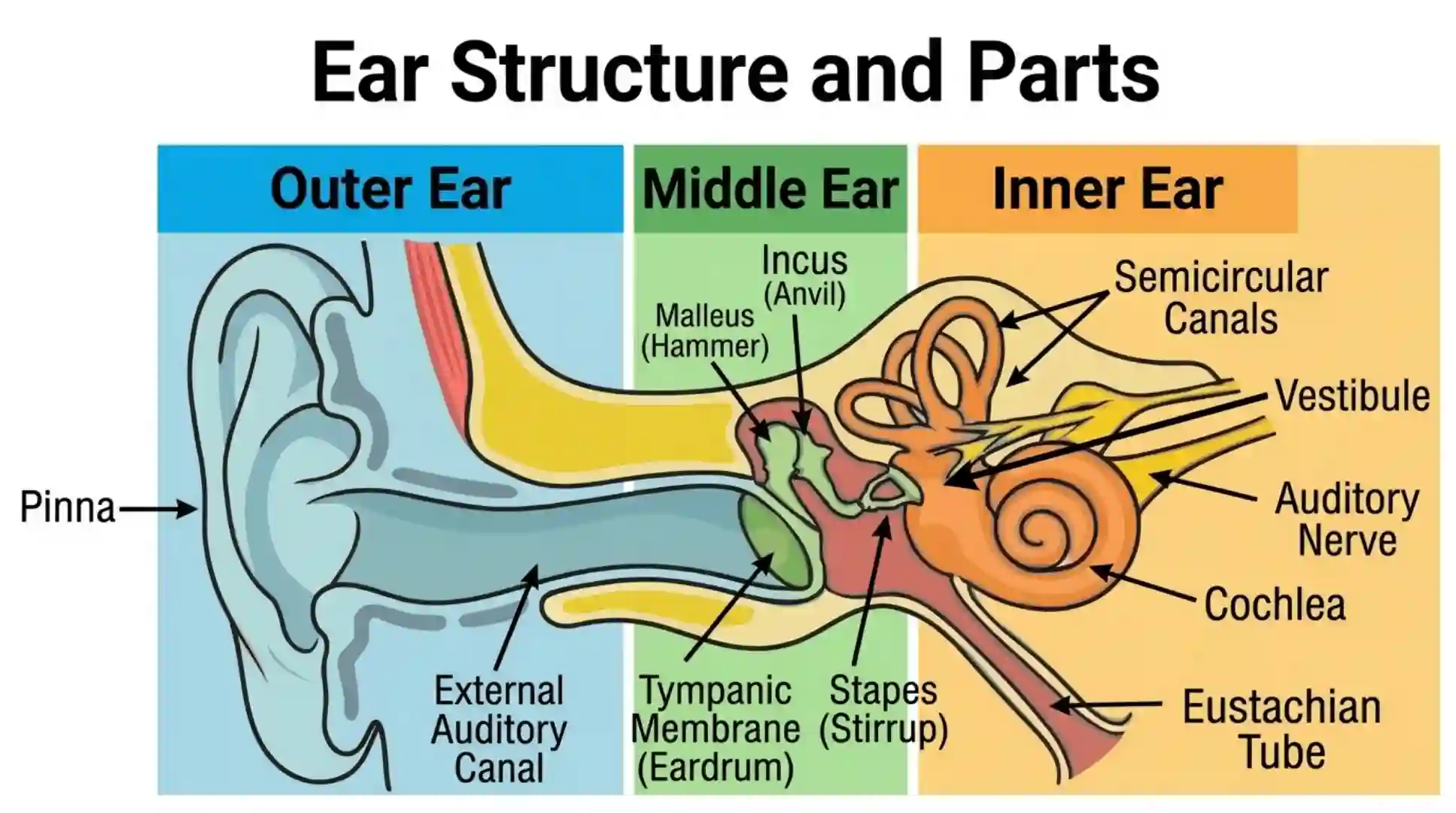
Important Human Ear Biology MCQs Part 1 | SSC, RRB & State Exams
Basic Concepts
1. Which organ in the human body controls both hearing and balance?
A) Eye
B) Nose
C) Ear
D) Tongue
Answer
✅ Answer: C) Ear
Explanation
Explanation: The ear not only helps in hearing but also plays a major role in maintaining body balance when a person stands or walks.
2. What is the study of the ear called?
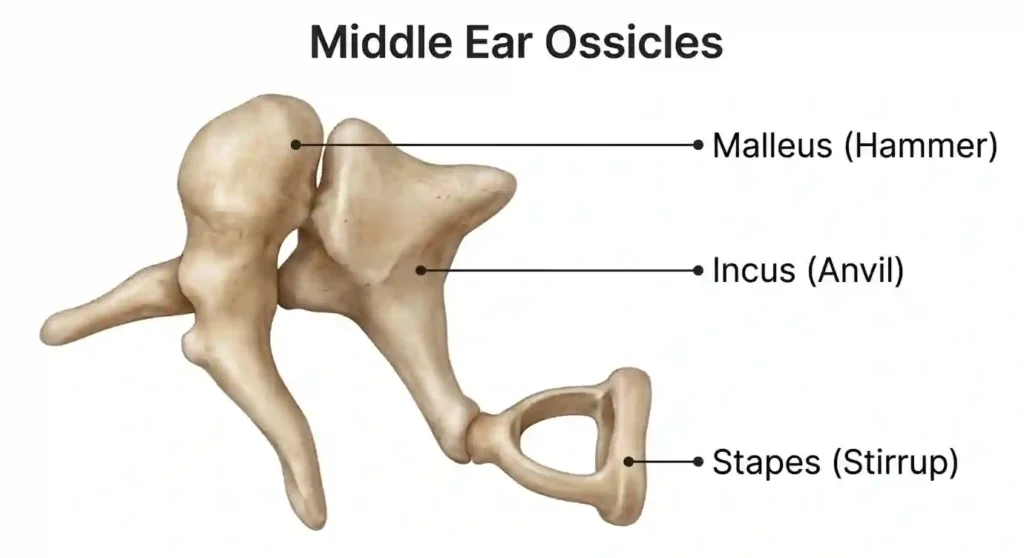
A) Audiology
B) Otology
C) Ophthalmology
D) Rhinology
Answer
✅ Answer: B) Otology
Explanation
Explanation: The study of the anatomy, functions, and diseases of the ear is called Otology. (Nose – Rhinology, Eye – Ophthalmology).
3. What is the total number of bones in the ear?
A) Two
B) Four
C) Six
D) Three – Malleus, Incus, Stapes
Answer
✅ Answer: D) Three – Malleus, Incus, Stapes
Explanation
Explanation: There are three small bones in each middle ear. (In humans, both ears combined have a total of 6 bones).
4. What is the study of hearing disorders and their treatment called?
A) Cardiology
B) Otology
C) Audiology
D) Neurology
Answer
✅ Answer: C) Audiology
Explanation
Explanation: The study of the science of sound, hearing ability, hearing disorders, and their treatment, such as hearing aids, is called Audiology.
2. Parts of Outer Ear
5. How many main parts does the human ear have?
A) Two
B) Three – Outer, Middle, Inner Ear
C) Four
D) Five
Answer
✅ Answer: B) Three – Outer, Middle, Inner Ear
Explanation
Explanation: Based on its structure, the human ear is divided into three main parts: the outer ear, middle ear, and inner ear.
▫️ Pinna / Auricle
6. What is the correct path of sound traveling through the ear?
A) Eardrum ➟ Pinna ➟ Cochlea ➟ Ear Ossicles
B) Pinna ➟ Eardrum ➟ Ear Ossicles ➟ Cochlea
C) Pinna ➟ Cochlea ➟ Eardrum ➟ Ear Ossicles
D) Cochlea ➟ Eardrum ➟ Pinna ➟ Ear Ossicles
Answer
✅ Answer: B) Pinna ➟ Eardrum ➟ Ear Ossicles ➟ Cochlea
Explanation
Explanation: External sound is first collected by the pinna (outer ear), travels through the auditory canal, and makes the eardrum vibrate. These vibrations then reach the cochlea in the inner ear through the ear ossicles.
7. What is the outer part of the ear generally called?
A) Eardrum
B) Cochlea
C) Ear Pinna
D) Malleus
Answer
✅ Answer: C) Ear Pinna
Explanation
Explanation: The movable, skin-fold-like part visible on the outside of both sides of the head is called the pinna or auricle.
8. Which part of the ear collects sound waves and sends them inside?
A) Eardrum
B) Pinna / Auricle
C) Cochlea
D) Eustachian Tube
Answer
✅ Answer: B) Pinna / Auricle
Explanation
Explanation: The primary function of the pinna is to gather sound waves traveling in the air and channel them into the auditory canal like a funnel.
9. What is the pinna made of?
A) Bone
B) Tendon
C) Cartilage
D) Muscle
Answer
✅ Answer: C) Cartilage
Explanation
Explanation: The pinna is made up of very soft and flexible cartilage.
10. What are the muscles that move the pinna in humans called?
A) Ciliary muscles
B) Auricular muscles
C) Rectus muscles
D) Masseter muscles
Answer
✅ Answer: B) Auricular muscles
Explanation
Explanation: In other mammals (like dogs and elephants), these muscles are used to turn the ear toward the source of sound. However, in humans, they have remained as useless vestigial organs.
▫️ External Auditory Canal
11. What happens when sound waves hit the eardrum?
A) Vibrates
B) Stops
C) Reflects
D) Refracts
Answer
✅ Answer: A) Vibrates
Explanation
Explanation: Just as the skin of a drum vibrates when struck, the eardrum creates vibrations as soon as external sound waves hit it.
12. How many times do the ear bones amplify sound waves?
A) 5 Times
B) 10 Times
C) Approximately 20 Times
D) 50 Times
Answer
✅ Answer: C) Approximately 20 Times
Explanation
Explanation: The three bones in the middle ear act like a lever, amplifying the sound vibrations from the eardrum by approximately 20 times and sending them strongly to the inner ear.
13. What is the approximate length of the external auditory canal?
A) 1.0 cm
B) Approximately 2.5 cm
C) 5.0 cm
D) 7.5 cm
Answer
✅ Answer: B) Approximately 2.5 cm
Explanation
Explanation: The tube-like passage from the pinna to the eardrum is called the auditory canal. Its length in adults is approximately 2.5 cm to 3 cm.
14. What is the purpose of the S-shaped curve in the external auditory canal?
A) Amplifying sound
B) Protecting Eardrum directly
C) Stopping air
D) For aesthetic appearance
Answer
✅ Answer: B) Protecting Eardrum directly
Explanation
Explanation: This S-shaped curve prevents wind, twigs, or other objects from directly hitting and damaging the eardrum.
15. Which glands produce earwax in the ear canal?
A) Sebaceous glands
B) Lacrimal glands
C) Ceruminous glands
D) Sweat glands
Answer
✅ Answer: C) Ceruminous glands
Explanation
Explanation: The ceruminous glands located under the skin of the ear canal secrete a sticky wax called cerumen. This protects the ear.
16. What is the primary use of earwax (Cerumen)?
A) Clearing sound
B) Protecting from dust and microbes
C) Moving ear bones
D) Regulating body temperature
Answer
✅ Answer: B) Protecting from dust and microbes
Explanation
Explanation: This wax traps dust particles and small insects, preventing them from reaching the eardrum. Additionally, it has antibacterial properties.
3. Parts of Middle Ear
▫️ Tympanic Membrane / Eardrum
17. What is the number of bones (Ossicles) present in the middle ear?
A) Two
B) Four
C) Six
D) Three – Malleus, Incus, Stapes
Answer
✅ Answer: D) Three – Malleus, Incus, Stapes
Explanation
Explanation: In each middle ear, there are three small bones linked together sequentially right after the eardrum.
🗓️
Previous Year Question:
☛ 2024 July 7 – AMRU HP BSc Nursing Admission Test
18. What is another name for the ‘Tympanic Membrane’?
A) Pinna
B) Eardrum
C) Cochlea
D) Eustachian Tube
Answer
✅ Answer: B) Eardrum
Explanation
Explanation: The tightly stretched, thin membrane of skin at the end of the auditory canal is called the eardrum or tympanic membrane.
19. Which membrane separates the outer ear and the middle ear?
A) Oval window
B) Round window
C) Basilar membrane
D) Tympanic membrane
Answer
✅ Answer: D) Tympanic membrane
Explanation
Explanation: The eardrum acts like a drum cover, separating the external ear canal from the middle ear cavity.
20. Which part of the ear do sound waves hit first?
A) Cochlea
B) Ear Drum
C) Malleus
D) Organ of Corti
Answer
✅ Answer: B) Ear Drum
Explanation
Explanation: After entering the auditory canal, sound waves traveling through the air first strike the eardrum and cause it to vibrate.
Aspirants! In this post, we have practiced important questions related to Human Ear Biology MCQs Part 1. We hope these will be highly useful for your upcoming competitive exams.
🔗 More Information: If you want to learn more in detail about the structure of the ear, read on Wikipedia.
Note: If you found these questions helpful, please share them with your friends. Also, if you have any doubts to clarify or valuable suggestions to offer, please let us know via our email at [email protected].